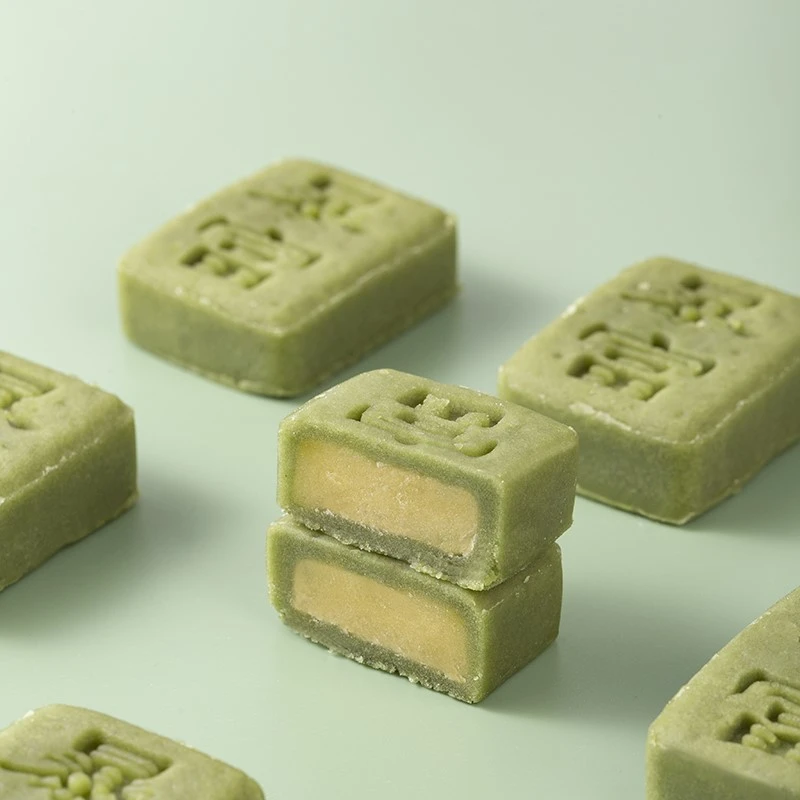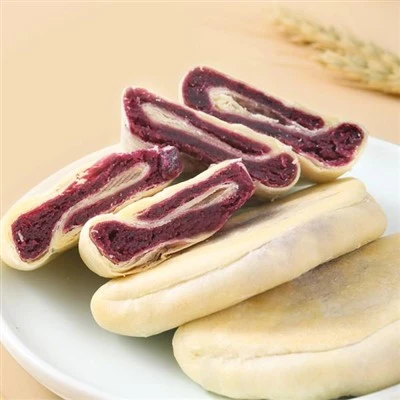
Mung bean cake is an important seasonal food for the traditional Chinese Dragon Boat Festival. It is a custom to eat mung bean cake during the festival in Wuhan, Nanjing, Xi'an, Wuhu, and other places. Because the word "cake" is a homophone for "high" , it symbolizes positive progress and continuous advancement.
The custom of eating mung bean cake during the Dragon Boat Festival is said to be related to commemorating Wu Zixu, a minister of the State of Wu during the late Spring and Autumn Period. From the perspective of traditional Chinese medicine, the Dragon Boat Festival falls in the height of summer, when Yang energy is abundant, making people prone to irritability. Mung beans are sweet and cool in nature, and have the effect of clearing heat and detoxifying. The soft texture of mung bean cake makes it suitable for consumption at this time to alleviate discomfort.
In some regions, such as Xi'an, mung bean cake is often eaten with zongzi (sticky rice dumplings) during the Dragon Boat Festival. The combination symbolizes "passing the imperial examinations," a good wish for students taking the exams.
Mung bean cake is also an indispensable part of Song Dynasty tea snacks, often paired with tea, presenting a small and exquisite form. In recent years, the market has been constantly innovating, with new flavors such as sea salt pandan coconut, osmanthus, matcha, Longjing tea, and cranberry appearing. It has also tried to combine with new fillings such as taro paste and chia seeds, while paying attention to reducing the sweetness to meet the needs of modern healthy eating.